
Compliance built into every transaction
Each transaction begins with three questions: the product's HS classification, the conformity requirements of the destination market and its export control status. These are clarified before any commitment is made, together with the reliability of the counterparties involved.
All parties are screened against international sanctions and restricted-party lists. For dual-use and controlled items, licensing and end-user certification are handled with the competent authorities and specialist advisers. We do not proceed with any transaction whose compliance cannot be established.
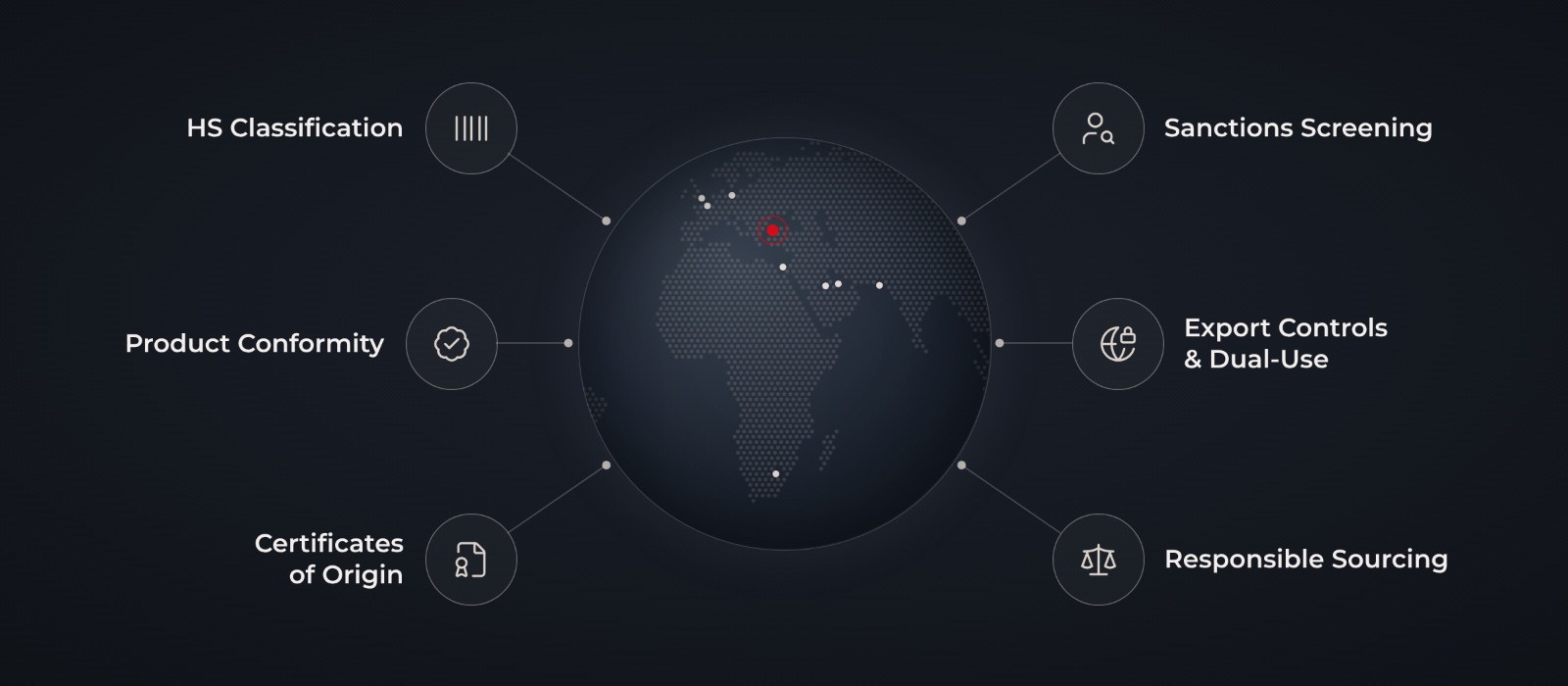
What we do
HS classification and certificates of origin
Correct tariff codes and origin status determine duties and any preferential treatment, so they are confirmed before prices are agreed.
Product conformity requirements (e.g. CE, REACH, SASO)
The certifications, labelling and technical files required in the destination market are identified early, avoiding delays at the border.
Sanctions and restricted-party screening
Buyers, end users and other counterparties are checked against UN, EU, US and Turkish lists, and screening is repeated if circumstances change.
Export controls, dual-use and end-user documentation
Controlled items are identified at the outset, and no shipment proceeds until the required licences and end-user undertakings are in place.
Responsible sourcing under our Supplier Code of Conduct
Manufacturers commit to our Supplier Code of Conduct, which covers labour practices, health and safety, business ethics and the environment.